
In the simplest terms, it’s a number. A boring, magical, life-saving number. You take the maximum stress your material can handle (its strength) and divide it by the actual stress you expect it to see.
So, Factor of Safety = Breaking Stress ÷ Working Stress. See? Simple math. If your steel beam can hold 100,000 pounds, but you only plan to put 20,000 pounds on it, your factor of safety is 5.
That’s a huge safety blanket. But do you always need a huge blanket? Not exactly. Sometimes a cozy throw will do, and sometimes you need a nuclear-bunker-sized quilt.
Step 1: Know What You’re Fighting
First, find out the ultimate strength of your material. This is the “breaking point,” the dramatic snap. You’ll find this in data sheets or from the supplier. Don’t guess! Guessing is how chairs collapse during a serious game of musical chairs.
Then, figure out the actual load. That’s the weight or force your thing will experience in real life. Is it a steady load (like a bookshelf full of books) or a sudden, jerky load (like a trampoline)?
Remember: dynamic loads (heavy, sudden, or repetitive) are way more dangerous than static ones. They multiply the stress in ways that hurt. Your safety factor needs to account for that selfish behavior.
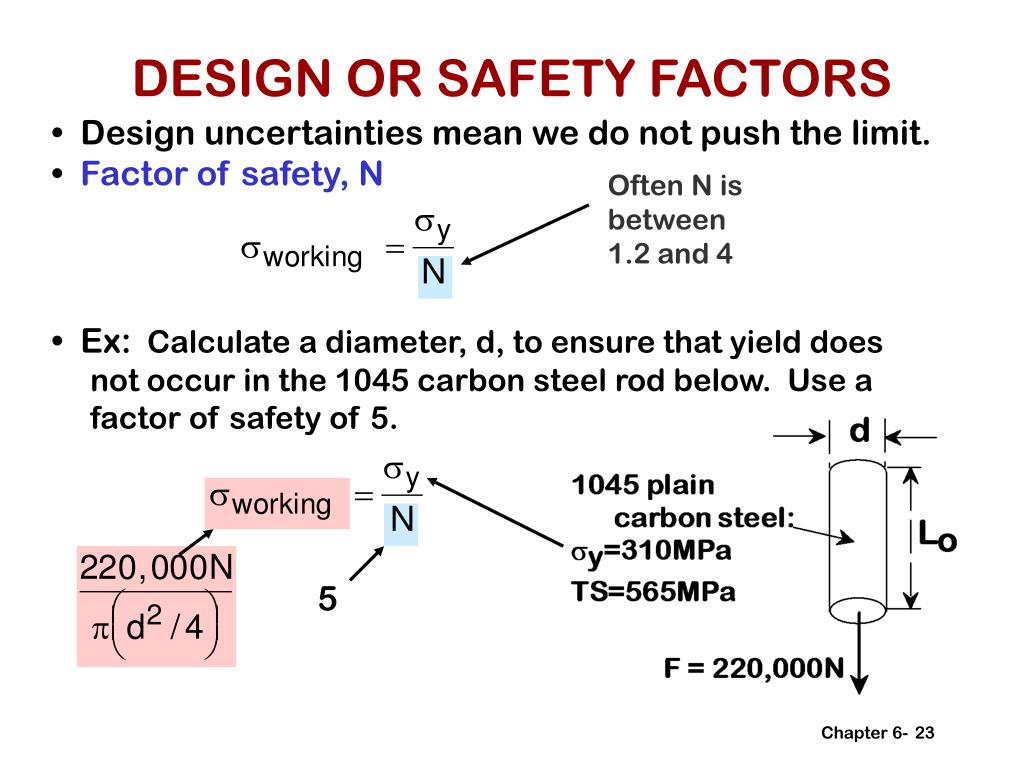 PPT - CHAPTER 6: MECHANICAL PROPERTIES PowerPoint Presentation, free
Step 2: Play the Guessing Game (The Fun Part)
Now you need to choose your number. This isn’t random—it’s full of judgment calls. And a little fear. Here’s the cheat code:
For static loads with known materials and perfect conditions? A factor of 1.5 to 2 is usually fine. This is your weekend project zone. You’re a hero here.
For dynamic loads or human safety? Bump that number up. Think 3 to 4. Are we talking about a bridge a bus might drive over? Or a ladder your dad uses to clean the gutters? Go with 5 or even 10. The higher the number, the less sleep you lose.
Pro tip: If someone could die from your creation breaking, don’t be cheap with the factor. A factor of 10 might feel absurd, but it feels a lot better than a lawsuit—or worse, a funeral.

