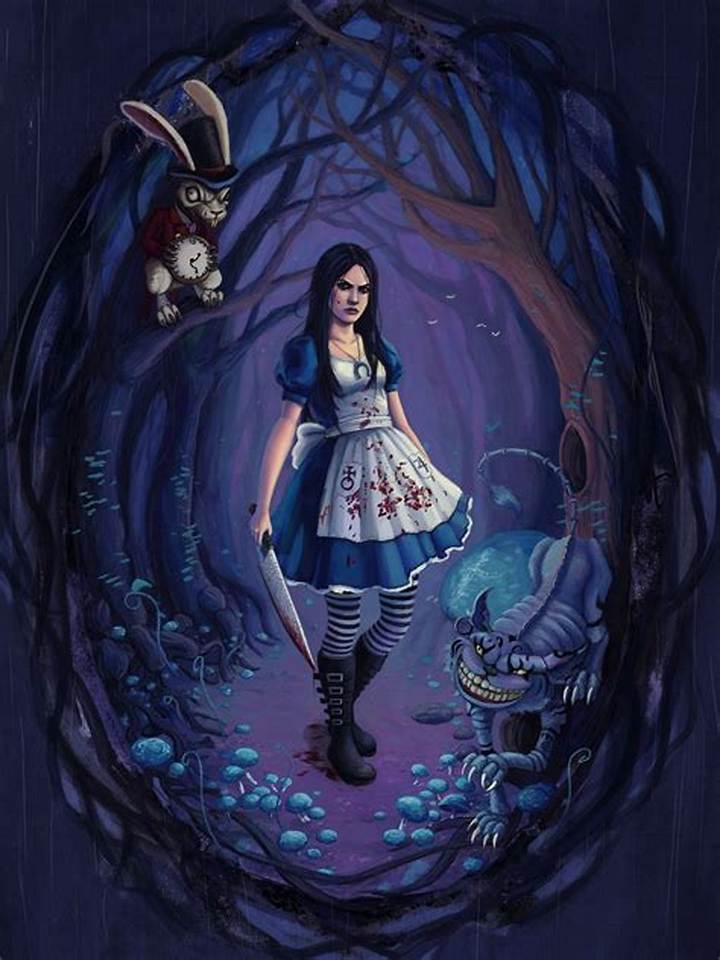
Alice Holic isn’t the only dark take on Wonderland. American McGee’s Alice and its sequel Alice: Madness Returns are perhaps the most famous examples. But there are key differences.
| Feature | Alice Holic | American McGee’s Alice |
|---|---|---|
| Genre | Visual novel / Adventure | Action / Platformer |
| Perspective | First-person (point-and-click) | Third-person |
| Horror style | Psychological, slow-burn | Action-horror, gothic |
| Mature content | Explicit violence, sexual themes | Violence, dark themes |
| Story focus | Character-driven, branching | Linear, revenge-driven |
| Art style | Anime-inspired, grotesque | Gothic, Tim Burton-esque |
Both games share a core idea—Wonderland as a reflection of Alice’s trauma—but they execute it very differently. Alice Holic is slower, more introspective. It’s a game that wants you to sit with the discomfort. American McGee’s Alice is more action-oriented, letting players fight their way through the madness.
Fans of one often appreciate the other, but they offer distinct experiences. If you prefer narrative depth and psychological tension, Alice Holic is the better choice. If you want a more traditional game with combat and platforming, American McGee’s Alice might be more your speed.

