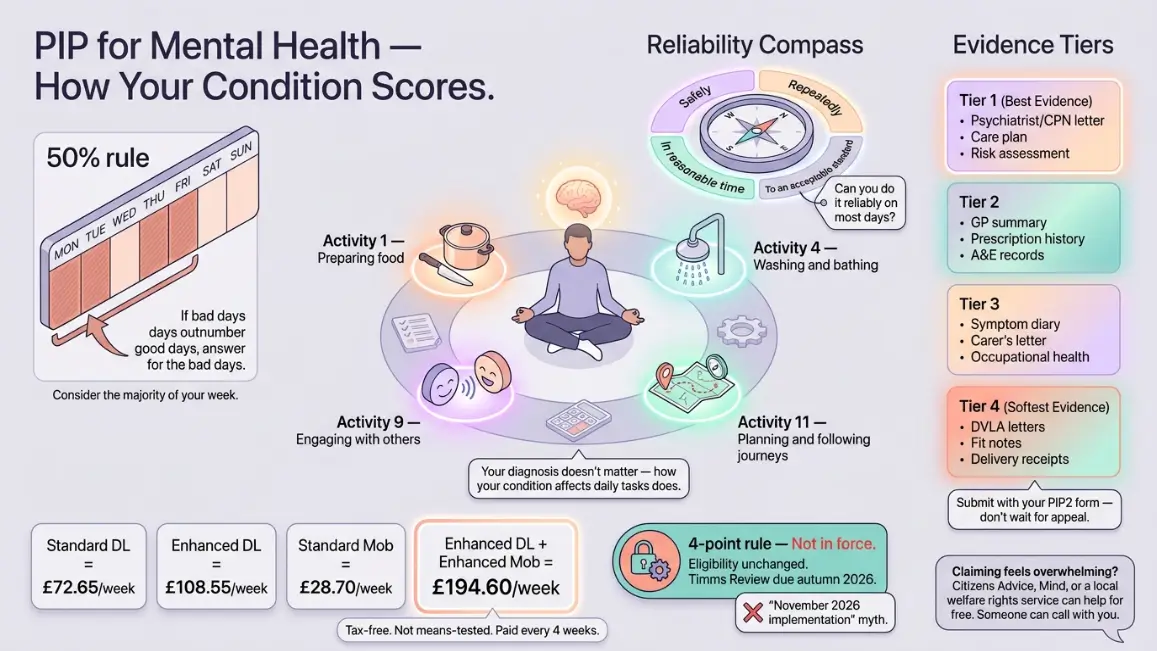
PIP is not just for physical disabilities—mental health conditions are explicitly included. Depression, anxiety, PTSD, bipolar disorder, schizophrenia, you name it. If your condition makes daily life a struggle, you have a shot.
Here’s the twist: PIP doesn’t care about your diagnosis. It cares about how your symptoms mess with your ability to function. (Kind of like that friend who doesn’t ask how you are, but just hands you a pizza and says, “Eat.”)
What does “function” even mean in real life?
Think about the last time you avoided the phone because your chest tightened. Or when you stood in the grocery aisle for ten minutes, frozen, because the fluorescent lights felt like a personal attack. Those moments? They matter.
PIP assesses two components: daily living and mobility. For mental health, the daily living part is your bread and butter. Can you plan meals? Cook safely? Manage medications? Engage with other people without having a meltdown?
The irony is that the very skills you need to fill out the form—focus, planning, dealing with stress—are often the ones your brain has switched off. (Thanks, brain. Really helpful.)

