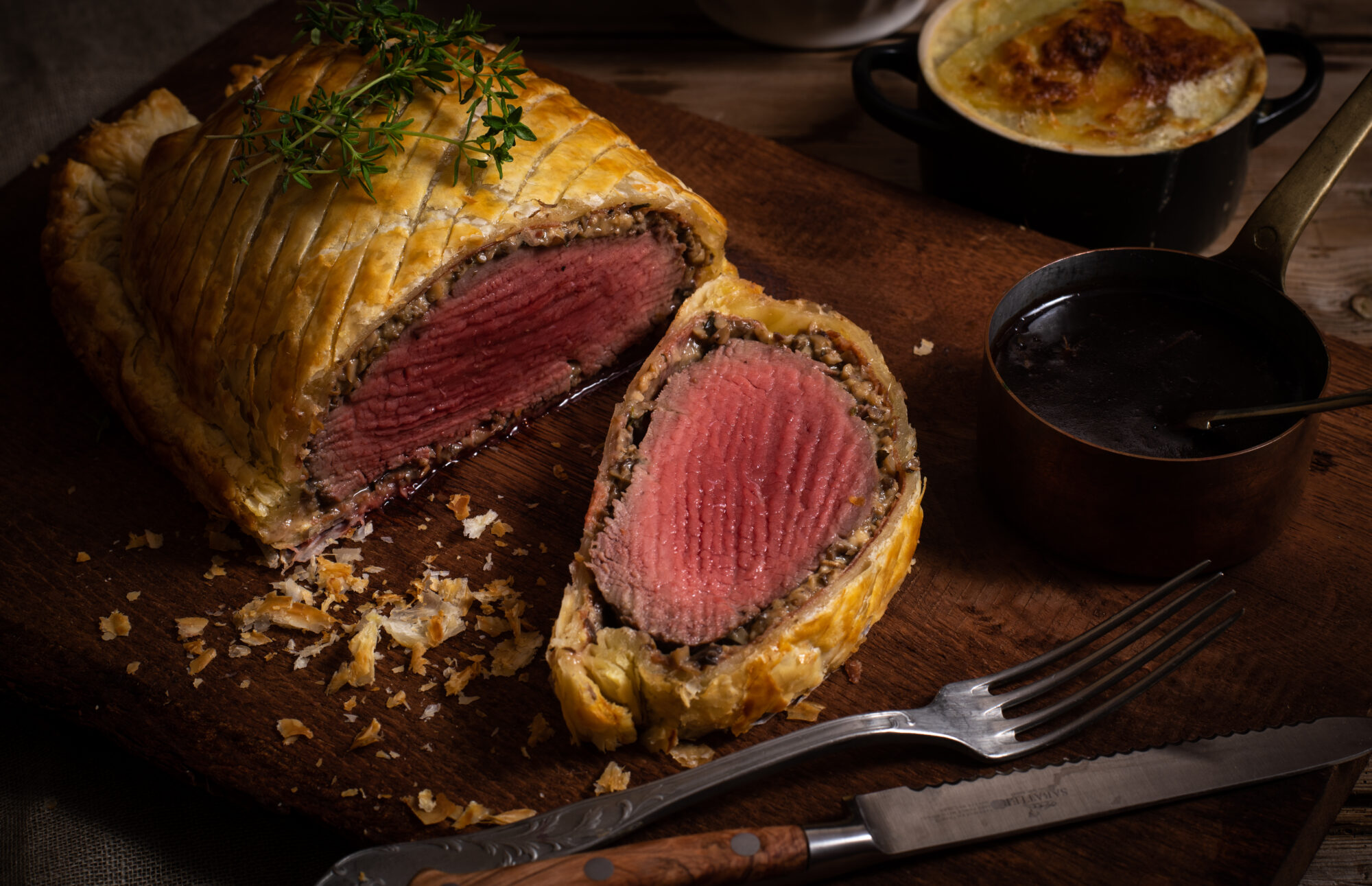
You want a roast that’s about 2 to 2.5 pounds and roughly 4 to 5 inches in diameter after trimming. This gives you a nice, thick center that can cook to medium-rare while the pastry turns golden.
If your tenderloin is too thin, it’ll be well-done before the pastry even browns. And well-done tenderloin is a tragedy. It’s like wearing a tuxedo to a pool party—just wrong.
Remember: resting is key. After it comes out of the oven, let it sit for at least 15 minutes. This lets the juices redistribute, and the pastry firm up. Cutting into it too early is like opening a birthday present before the party starts—chaotic and messy.
A Note on Grass-Fed vs. Grain-Fed
Grain-fed tenderloin is richer and more buttery. Grass-fed is leaner and has a slightly gamey taste. Both work, but grain-fed is the classic choice for Wellington because it’s more forgiving.
If you go grass-fed, watch your cooking time—it can dry out faster. Also, your wallet might cry a little. Grass-fed is usually pricier. But hey, it’s a special occasion, right? Live a little.

