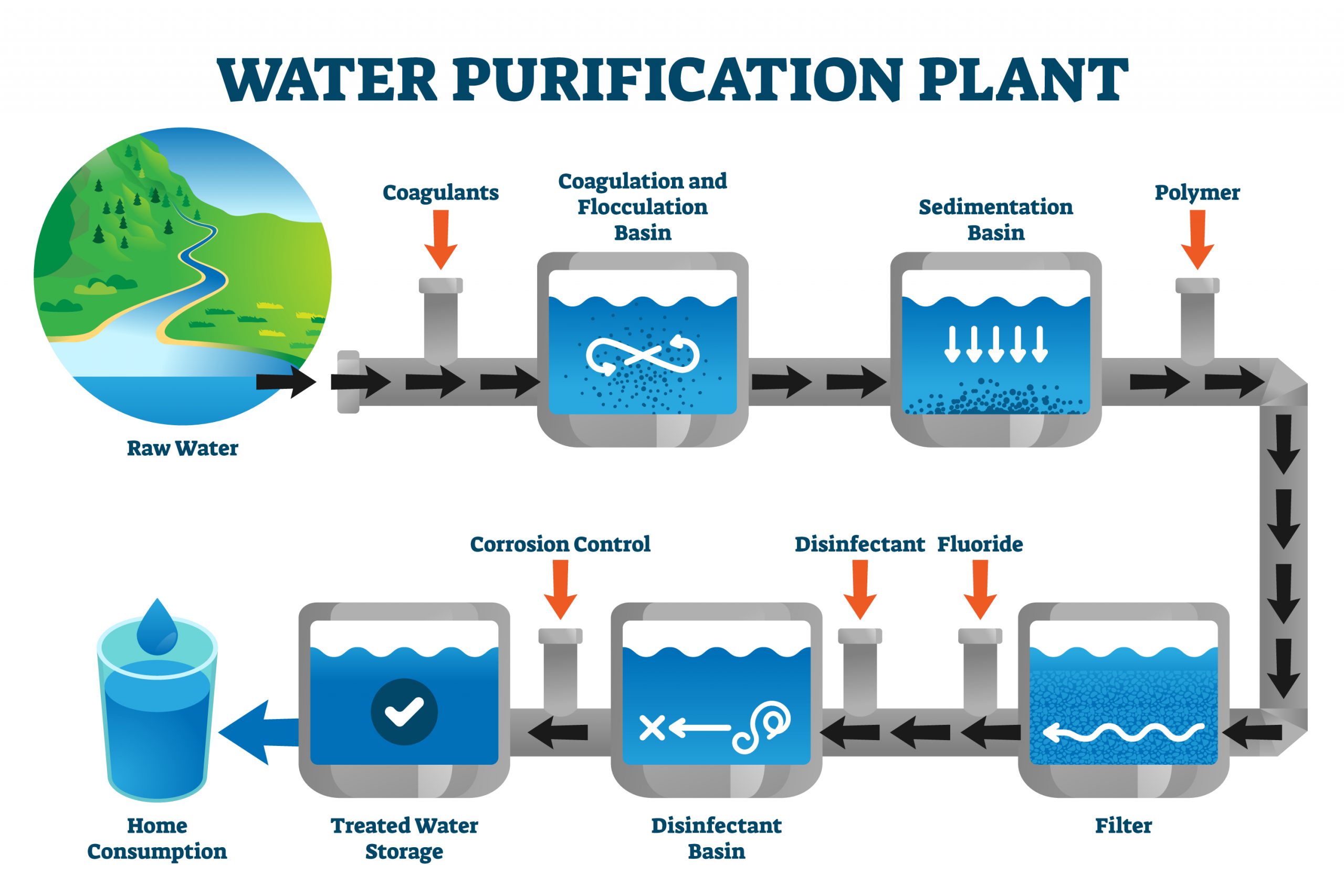
Next, the water meanders through layers of sand, gravel, and charcoal. This is not your kid’s sandbox—this is a massive filter, like a coffee maker for planet Earth. The sand traps leftover flocs and bacteria, while the charcoal absorbs chemicals, smells, and that weird taste of “I think this mop water.”
Fun fact: activated charcoal is also what they use in fancy hospitals for people who accidentally poisoned themselves. So, your water filter is literally the same stuff that saves your life after a bad mushroom hunt. You’re welcome.
Step Four: The Killer Disinfectant (Chlorine & Friends)
By now, water looks clear, but it’s still crawling with invisible microbes that want to throw a party in your gut. Enter chlorine, the designated police officer of the purification world. It wipes out bacteria and viruses faster than a mom cleaning a sticky counter. Some places also use ozone gas or ultraviolet (UV) light to zap any survivors.
UV light is especially cool—it scrambles the DNA of germs so they’re basically brain-dead zombies. They can’t reproduce, so they just float there, useless. It’s like turning evil villains into confused cats. No offense to cats.
 How Does Reverse Osmosis Filtration Work?

