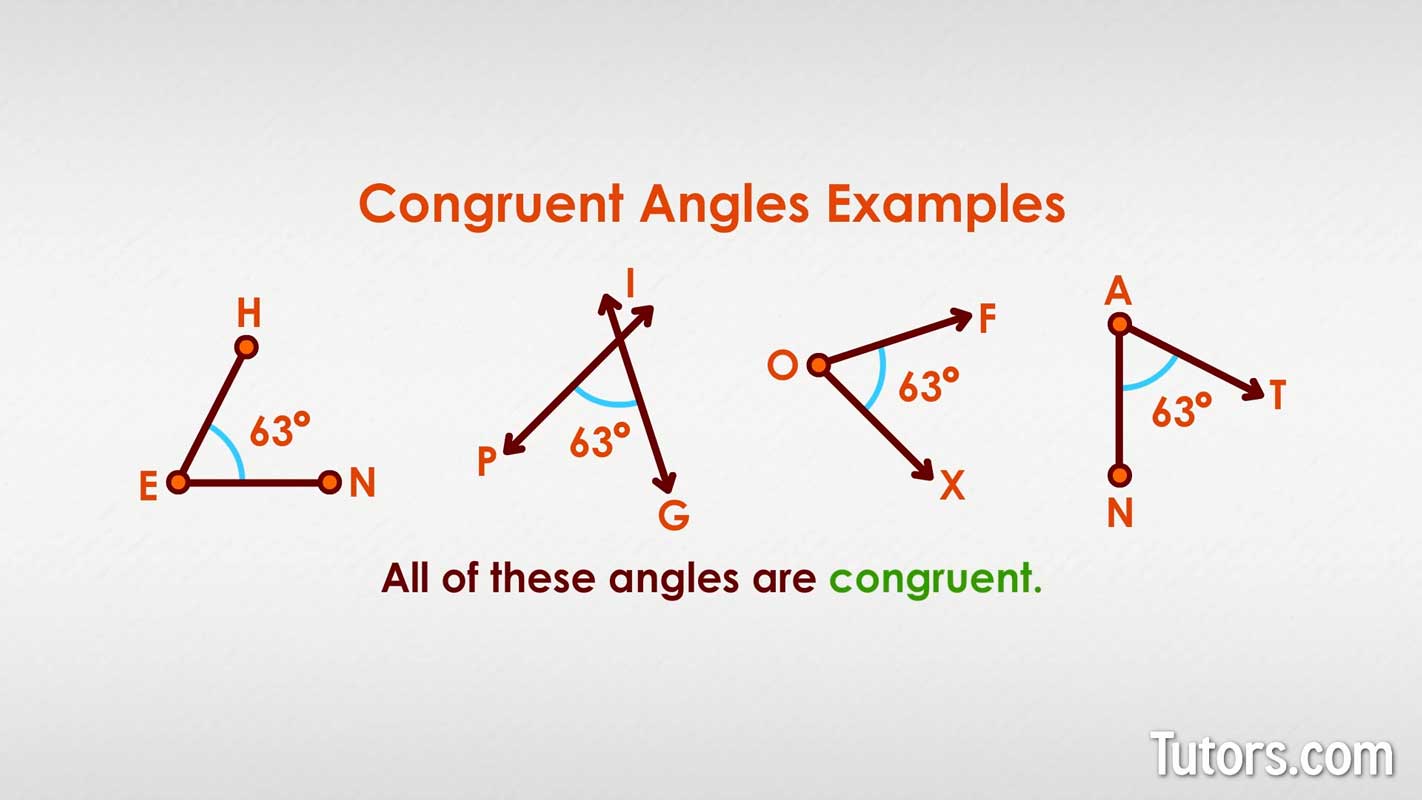
Here’s where the rubber meets the road. Angles are measured in degrees. A right angle is 90°. An acute angle is less than that—like a shy cat. An obtuse angle is bigger than 90°, like a lazy stretch.
Two angles are congruent if they’re both, say, 45°. One could be from a cute little triangle, the other from a massive octagon. Doesn’t matter. 45° equals 45°. Case closed.
We use a little symbol to show it: ≅. It looks like a squiggly equal sign. It’s basically saying, “Hey, these two are the same. Deal with it.” And you have to deal with it. It’s math.
Parallel Lines: The Congruent Angle Factory
Let’s get visual. Picture train tracks—two parallel lines going forever. Now a third line cuts across them like a ladder rung. That’s a transversal. And oh boy, does it make congruent angles.
You get corresponding angles (the ones in the same corner of each intersection). They’re congruent. You get alternate exterior angles (outside the tracks, but opposite sides). Also congruent. It’s like a factory churning out identical twins.
 Congruent Angles - Definition, Theorem, Examples, Construction
If you ever feel lost, just remember this: parallel lines are the ultimate copy machine. They spit out congruent angles like a toddler with stickers. It’s adorable and slightly chaotic.