
This is the big question, and the answer is: it depends. For most of us with healthy immune systems, kicking up a cloud of mulch dust is just a sneeze-inducing nuisance. You might get a tickle in your throat, but you’ll be fine after a glass of water.
However, if you have asthma, allergies, or a weakened immune system, those mold spores can be a real problem. Inhaling large amounts can cause something called "farmer’s lung" in extreme cases. That sounds scary, but remember—you’d need to be shoveling dry, dusty mulch in a closed shed for hours to get there.
The rule of thumb is simple: treat mulch like you treat a roaring campfire. Enjoy it from a distance, and don’t stick your face in it to take a deep whiff. If you are sensitive, wear a simple dust mask when working with dry mulch. That’s it.
How to Be a Smart Mulch User
You do not have to give up your beloved mulch. You just need to outsmart the spores. First, buy aged mulch. If the bag feels hot or smells like vinegar or strong ammonia, let it sit in a corner for a few weeks. That heat means the fungi are partying hard inside the bag—let them finish before you spread it.
Second, do not pile it against your house. Keep a few inches of space between the mulch and your siding or foundation. This stops the artillery fungus from decorating your walls, and it also keeps termites from using the mulch as a bridge to your home.
Third, fluff it regularly. Grab a rake and turn the mulch over every couple of weeks. This breaks up the compacted, moist layers where mold loves to hide. It is like giving your garden bed a good stretch and a breath of fresh air.
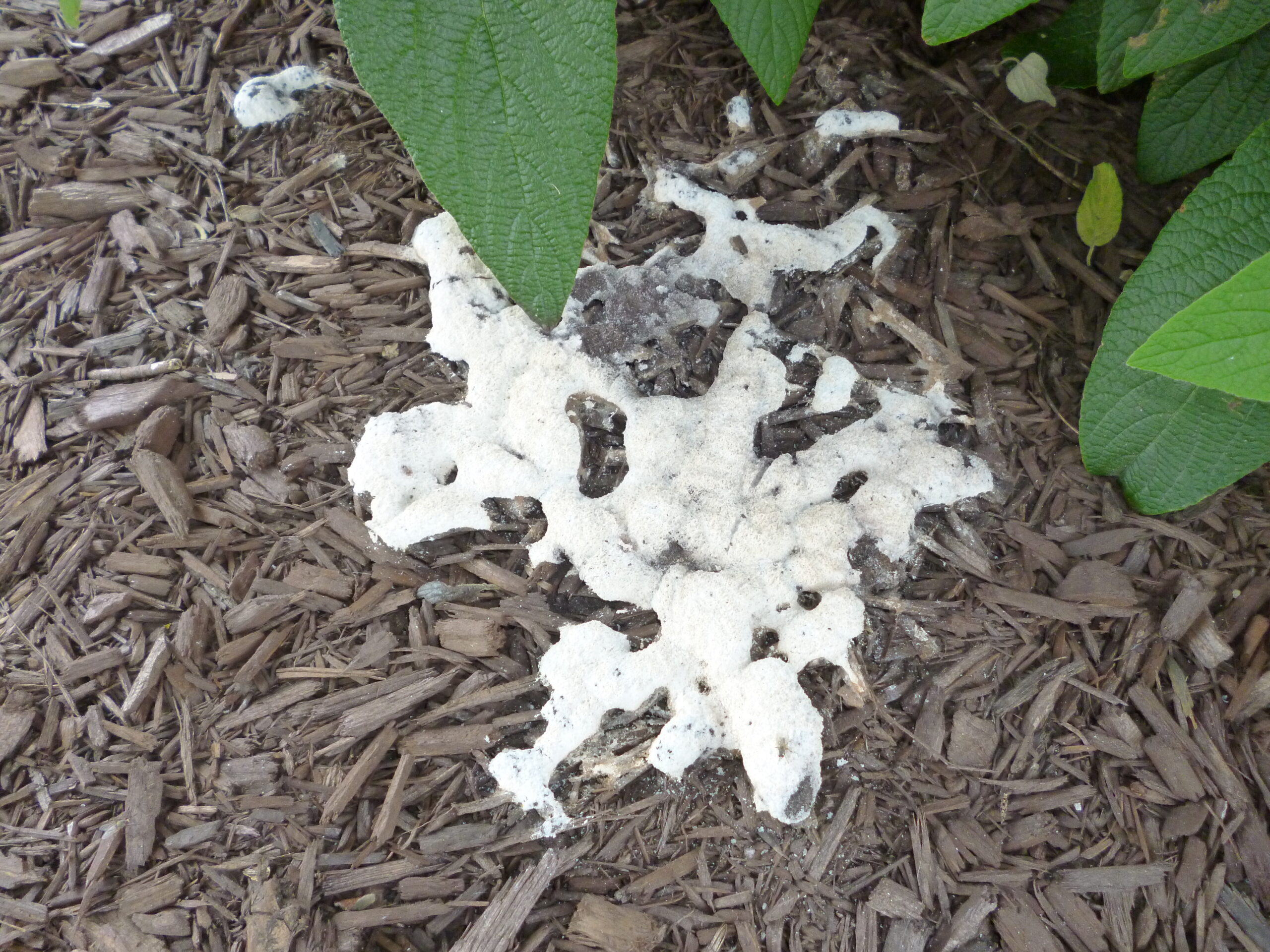 Black Slime Mold On Soil

